

THE CHALLENGE
Worldwide, an estimated 2 billion people lack access to basic sanitation facilities such as toilets or latrines.* Lack of sanitation contributes to about 10 percent of the global burden of disease, mainly via diarrheal diseases.**
THE OPPORTUNITY
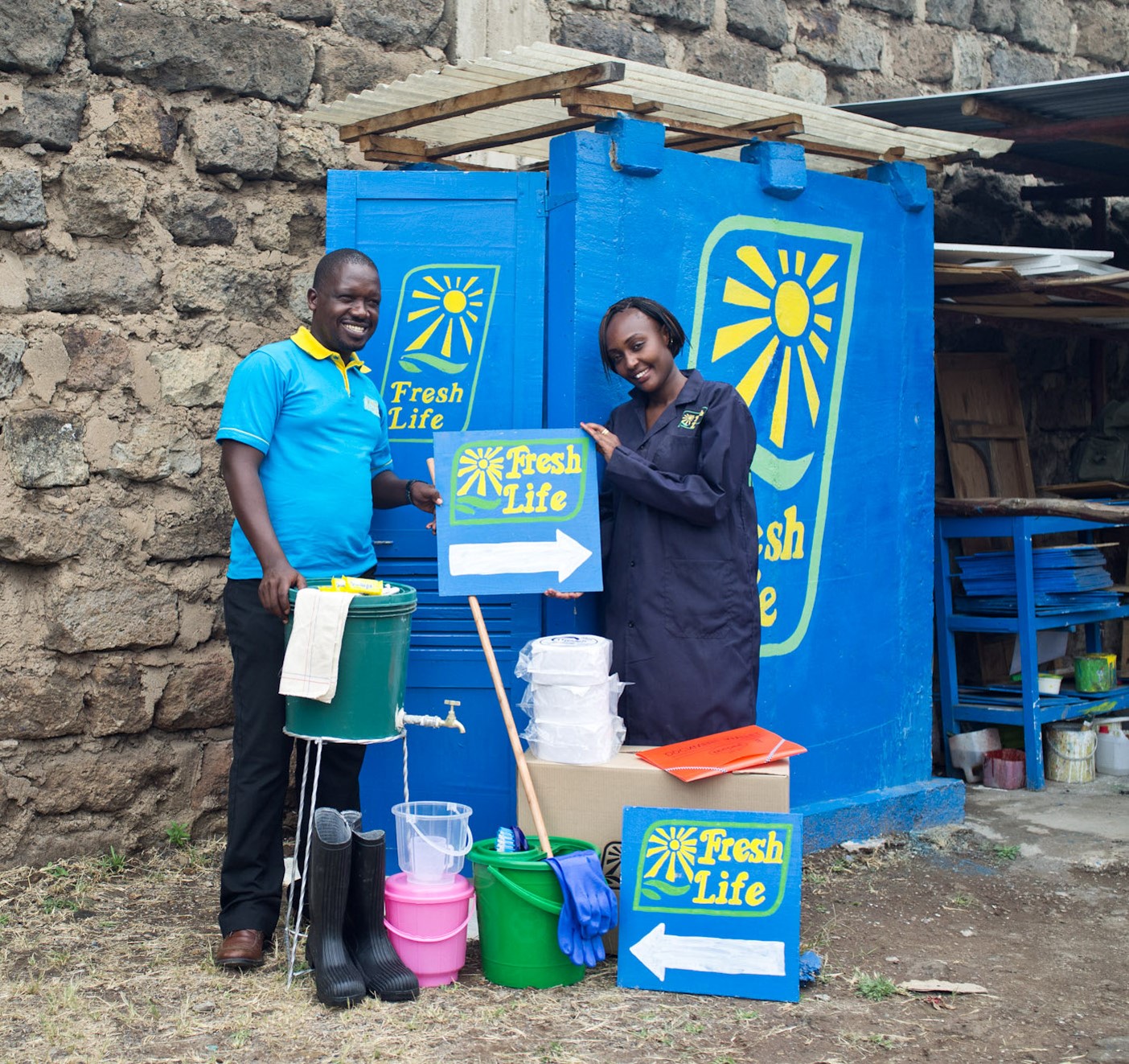
GP and its affiliated funds aim to improve the health and economic position of low-income urban and peri-urban households by investing in partners that provide access to low-cost, hygienic toilets and waste management services.
WHO IS SERVED
The target demographic is populations living in poor, informal settlements in urban and peri-urban areas, living on less than $3.65 PPP/person/day.
WHAT IS DELIVERED
Clients Receive:
- Low cost, hygienic on-site toilets and community toilets with waste management services.
WHY IT IS IMPACTFUL
Household health and economics improve due to:
- Access to improved sanitation
- Reduced use of unhygienic sanitation services
- Lower rates of diarrhea and sanitation-related diseases
- Young women and girls access cleaner, more private, safer facilities to manage their menstruation
Households in poverty may mitigate climate change by contributing to improved waste management and generation of climate-friendly products that reduce carbon emissions (e.g., organic fertilizer, biogas, insect-based animal feed).
* “Sanitation Key Facts,” World Health Organization, 2019, https://www.who.int/news-room/fact-sheets/detail/sanitation.
** Duncan Mara, Jon Lane, Beth Scott, and David Trouba, “Sanitation and Health”, PLoS Medicine, no. 7(11) (November 2010), US National Library of Medicine National Institutes of Health website, https://www.ncbi.nlm.nih.gov/pmc/articles/PMC2981586/.